NC Car Accident Lawyers Explain Your Crash Report
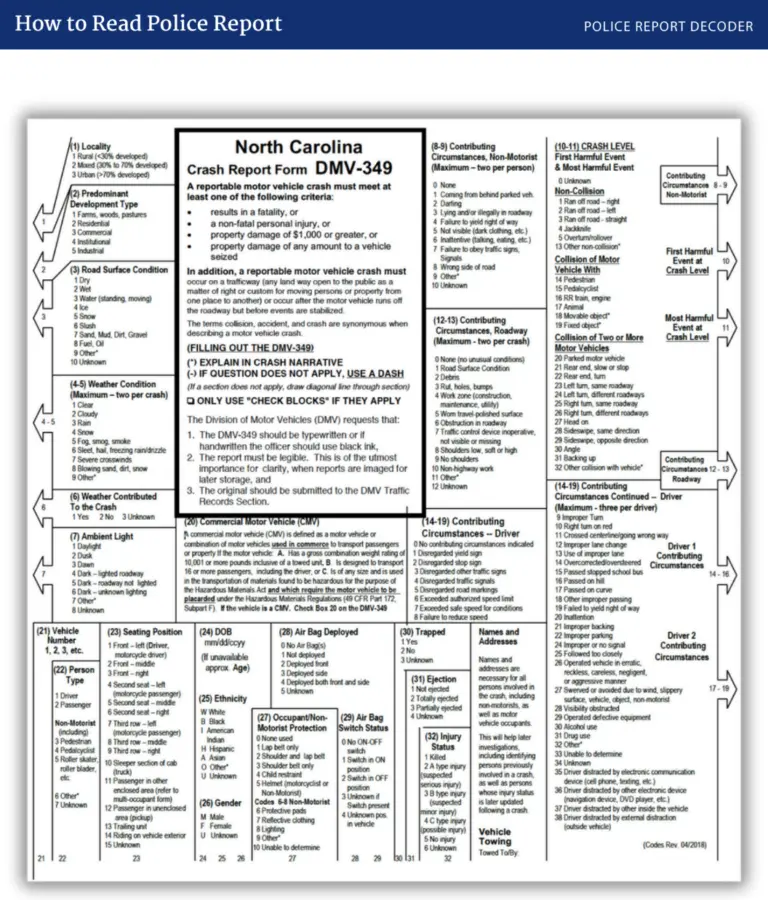
After a car accident, one of the most important documents you’ll receive is the North Carolina DMV-349 Crash Report, commonly referred to as a police accident report. This report provides an official record of the collision and contains valuable information that insurance companies, attorneys, and courts may use when evaluating your claim.
Although a North Carolina police accident report does not determine legal liability, it can provide important details about the crash, including the parties involved, vehicle damage, road conditions, witness information, and the investigating officer’s observations. Understanding how to read your report can help you identify errors, better understand what happened, and protect your legal rights.
At NC Car Accident Lawyers, we help accident victims interpret their police reports, identify inaccuracies, and build strong claims for compensation.
What Is a North Carolina DMV-349 Crash Report?
The DMV-349 Crash Report is the standard accident report completed by law enforcement officers after investigating a motor vehicle collision. The report documents the facts known at the scene and includes information that may become important during insurance negotiations or a personal injury lawsuit.
Depending on the circumstances of your accident, the report may include:
- Date, time, and location of the collision
- Names and contact information for drivers and passengers
- Vehicle information
- Insurance details
- Roadway and weather conditions
- Diagram of the collision
- Officer’s narrative
- Contributing factors
- Traffic violations or citations
- Witness information
- Injury severity
Key Sections of a North Carolina Police Accident Report
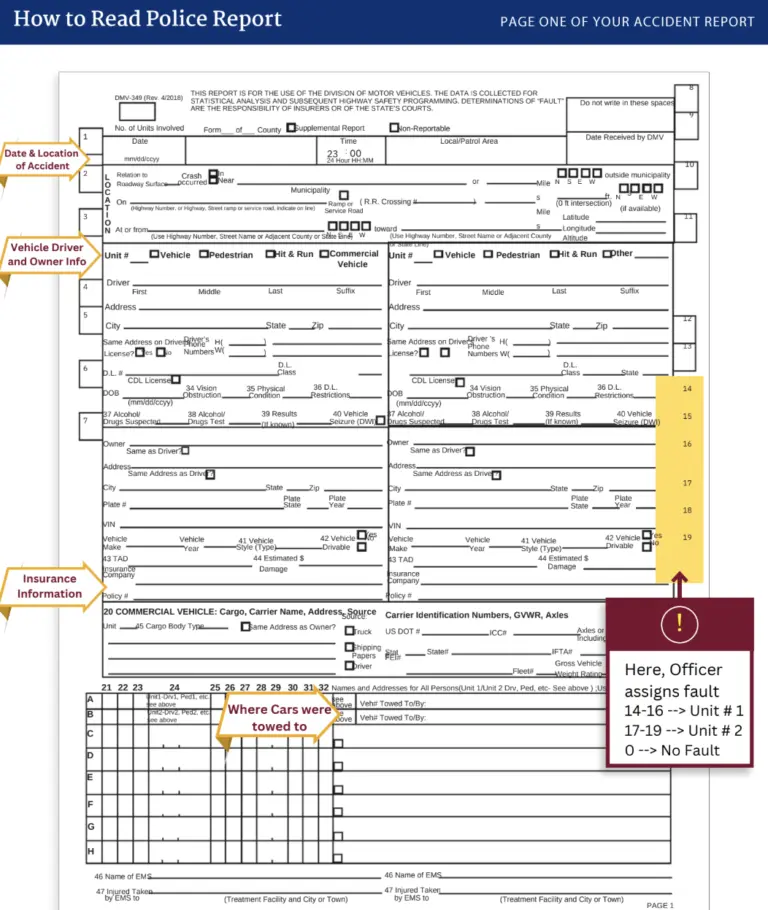
Accident Information
The first section contains the basic facts about the collision, including:
- Date and time
- County and city
- Highway or street name
- Direction of travel
- Type of roadway
- Crash report number
Always verify that this information is accurate.
Driver and Vehicle Information
Each driver involved in the collision will have a separate section listing:
- Name and address
- Driver’s license information
- Vehicle year, make, and model
- Vehicle identification number (VIN)
- Registration information
- Insurance company and policy number
Review this section carefully to ensure there are no spelling errors or incorrect insurance information.
Passenger Information
The report may list passengers in each vehicle, along with their injuries and seating positions.
Injury Classification
Officers assign an injury severity code based on what they observe at the scene. Common classifications include:
- No apparent injury
- Possible injury
- Suspected minor injury
- Suspected serious injury
- Fatal injury
Because some injuries develop hours or days later, this section may not accurately reflect your medical condition. Always seek medical attention after an accident, even if you initially feel fine.
Roadway and Environmental Conditions
This section documents factors such as:
- Weather
- Lighting
- Road surface conditions
- Traffic control devices
- Speed limits
- Visibility
These details may help explain how the collision occurred.
Vehicle Damage
The officer records where each vehicle sustained damage and estimates the severity of the impact.
Damage diagrams often indicate whether the collision involved:
- Front-end impact
- Rear-end impact
- Side-impact
- Multiple impacts
- Rollover
Vehicle damage can support evidence regarding how the crash occurred.
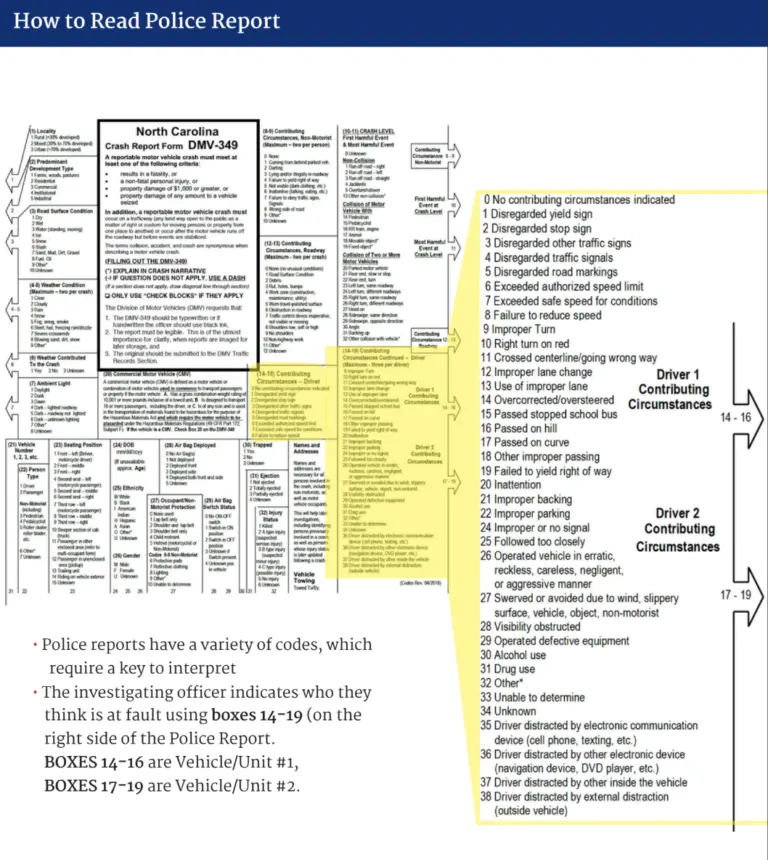
Contributing Circumstances
One of the most important sections identifies factors the officer believes contributed to the accident.
Examples include:
- Following too closely
- Failure to yield
- Speeding
- Distracted driving
- Improper lane change
- Driving under the influence
- Running a stop sign or red light
- Driver inattention
These observations may influence how insurance companies evaluate fault.
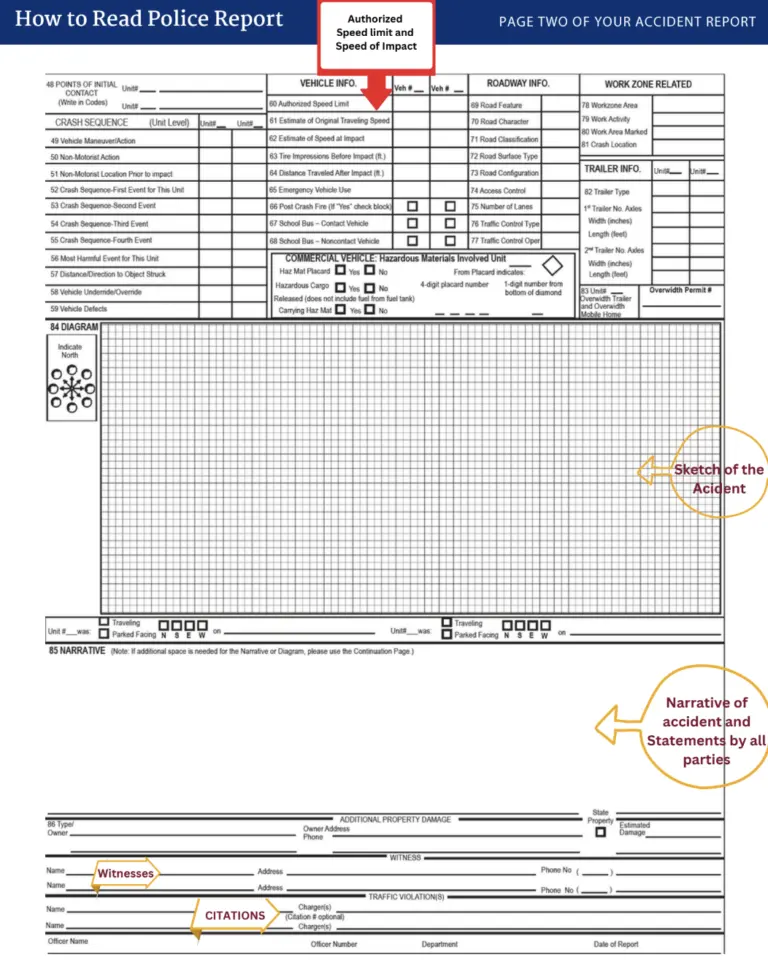
Officer’s Narrative
The narrative summarizes the officer’s investigation and describes how the collision occurred based on evidence, witness statements, and observations.
The narrative may discuss:
- Vehicle movements
- Points of impact
- Driver statements
- Witness accounts
- Traffic violations
- Physical evidence
Because insurance adjusters often rely on this section, it is important to review it carefully.
Crash Diagram
Most North Carolina accident reports include a diagram illustrating:
- Direction each vehicle traveled
- Position of the vehicles
- Road layout
- Traffic signals
- Point of impact
The diagram provides a visual representation of the collision and can help explain the events leading up to the crash.
Common Abbreviations and Codes
North Carolina police reports often use abbreviations and numerical codes to save space.
These may refer to:
- Vehicle types
- Injury severity
- Road conditions
- Driver actions
- Traffic control devices
- Collision types
If you are unsure what a code means, an experienced attorney can explain its significance.
What If Your Police Accident Report Contains Errors?
Police officers work under difficult conditions and occasionally make mistakes.
Common errors include:
- Incorrect vehicle information
- Misspelled names
- Wrong insurance information
- Missing witnesses
- Incorrect roadway descriptions
- Inaccurate diagrams
- Missing injuries
While officers generally cannot change opinions or conclusions after submitting a report, factual mistakes may sometimes be corrected or supplemented.
If you believe your report contains errors, speak with a car accident attorney before contacting the investigating agency.
Why Your Police Report Matters
Your accident report may become one of the first documents reviewed by:
- Insurance companies
- Personal injury attorneys
- Accident reconstruction experts
- Medical providers
- Courts
Although the report alone does not determine fault, it can significantly influence the direction of your claim.
Having an experienced attorney review your report helps identify inconsistencies, gather additional evidence, and protect your right to recover compensation.

Frequently Asked Questions
Is a North Carolina police accident report the final determination of fault?
No. A police accident report is an important piece of evidence, but it does not legally determine who is responsible for the accident. Insurance companies and courts consider many additional factors when deciding liability.
How long does it take to get a North Carolina accident report?
In many cases, reports become available within several days after the accident, although the exact timeframe depends on the investigating law enforcement agency.
Can I dispute information in my police report?
Yes. If factual information is incorrect, it may be possible to request a correction or submit additional evidence. An attorney can help determine the best approach.
What if my injuries were not listed on the report?
This is common because many injuries do not appear immediately after a collision. Continue receiving medical treatment and keep records of your diagnosis and expenses.
Will the insurance company use my police report?
Yes. Insurance adjusters typically review the police report early in the claims process to understand how the accident occurred and evaluate liability.
What if the other driver disagrees with the police report?
Disagreements are not unusual. Insurance companies evaluate many forms of evidence, including witness statements, photographs, vehicle damage, surveillance footage, medical records, and expert opinions.
Do I need an attorney to understand my accident report?
While you can read the report yourself, many sections contain technical language, abbreviations, and investigative findings that may affect your claim. An attorney can explain what the report means and how it may impact your case.
Let NC Car Accident Lawyers Help Protect Your Rights
Understanding your North Carolina police accident report is an important first step after a collision, but it is only one part of building a successful personal injury claim. Insurance companies often begin evaluating your case as soon as the report becomes available, making it important to understand what it says and whether it accurately reflects what happened.
At NC Car Accident Lawyers, our experienced legal team can review your police accident report, answer your questions, identify any potential issues, and explain your legal options. If someone else’s negligence caused your injuries, we are prepared to fight for the compensation you deserve.
Contact NC Car Accident Lawyers today for a free consultation, and let us help you understand your North Carolina police accident report and move forward with confidence.

